
Tech News Roundup — October 27, 2026 (NOON)
AI infrastructure is reshaping the energy landscape as major models require unprecedented power—a reality made starkly visible by Anthropic’s IPO filing this week. Meanwhile, Microsoft and Apple grapple with scaling challenges of their own: massive workforce restructuring and growing hardware reliability issues shadow the sector’s growth trajectory. The week highlights both the promise and the strain of rapid AI advancement.
Anthropic’s IPO Exposes AI’s Escalating Energy Crisis
Anthropic’s S-1 SEC filing for its upcoming IPO lays bare the energy demands that underpin generative AI: data centers powering large language models are becoming critically dependent on natural gas (primarily methane), with competition for power-rich locations “intense.” The company acknowledges rising fuel costs and supply constraints as direct risks to its data center buildout. This dependency creates a catch-22: as climate change pressures surge, demand for cooling increases, further straining power grids already taxed by AI infrastructure expansion. Industry observers note that Anthropic is just one of several trillion-dollar-plus AI companies facing similar constraints, amplifying concerns about sustainable scaling.
Microsoft Offers Voluntary Buyouts to 60,000 Employees
Microsoft is offering voluntary exit packages to up to 60,000 employees globally—about 20% of its workforce—across the US, UK, Canada, and India. The company frames the move as a “voluntary exit offer” with “financial support and career planning resources,” avoiding another round of forced layoffs. Eligible staff span Microsoft’s AI experiences, Copilot, CoreAI, Windows + Devices, Xbox, finance, and HR teams. The buyouts signal Microsoft’s ongoing workforce optimization as it shifts resources toward higher-margin AI initiatives and cloud services. Some analysts view the program as a way to reduce costs without reputational damage of mass involuntary layoffs, while others see it as a natural realignment following aggressive 2023 hiring during the AI boom.
iPhone Duo Display Cracks Prompt Apple Acknowledgment
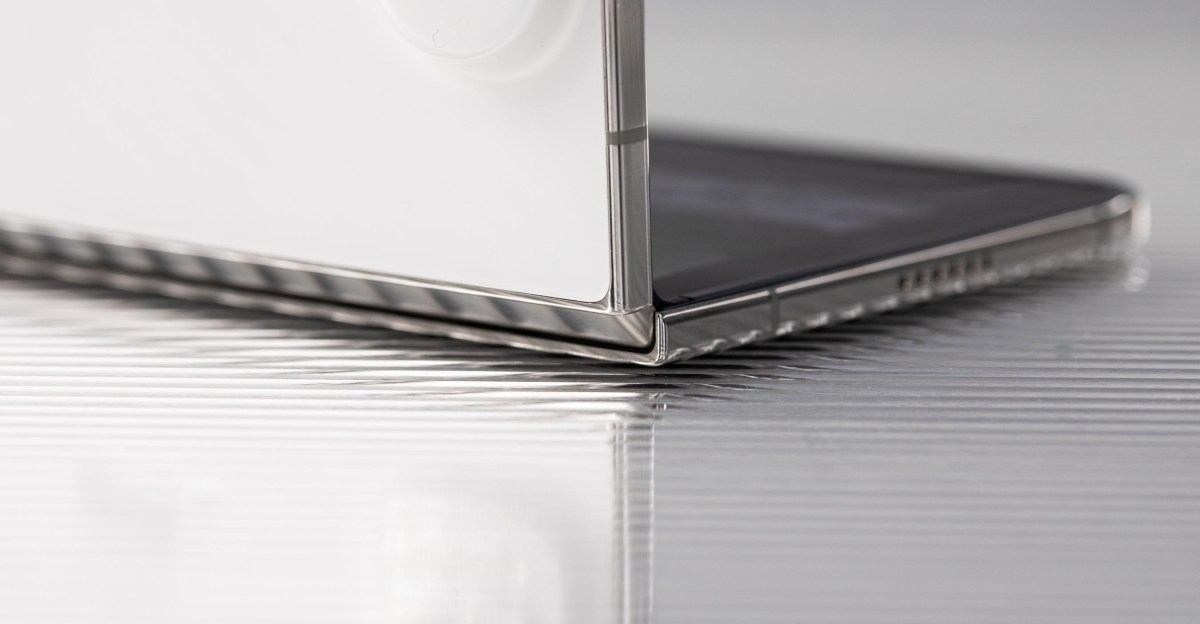
Apple has acknowledged an issue affecting the inner display of iPhone Duo units, with users reporting bright lines and cracks running from the center of the foldable screen. The company says the problem impacts “a small number” of units and directs affected owners to AppleCare for replacements. Reports indicate the cracks appear primarily along the hinge area—a common failure point in foldable designs. While Apple emphasizes early user enthusiasm and developer adoption, the display durability concerns echo issues that have plagued Samsung’s Galaxy Z Fold and Flip lines since their launch. The incident highlights the engineering challenges inherent to foldable technology, particularly the stress points where screens bend repeatedly.
Xbox Game Pass Arrives on T-Mobile Mobile Plans

Xbox Game Pass is finally coming to U.S. mobile phones through a partnership with T-Mobile. The carrier is launching “T-Mix” plans that integrate Game Pass into mobile subscriptions, enabling subscribers to play console and PC games on their handsets. The partnership, long anticipated by mobile gamers, gives T-Mobile a competitive differentiator in postpaid plans while providing Microsoft with a major distribution channel for cloud gaming. The service leverages Xbox Cloud Gaming infrastructure to stream titles directly to phones, eliminating the need for powerful local hardware. Industry analysts view the integration as a turning point for cloud gaming adoption—previous attempts like Nvidia GeForce Now struggled with carrier limitations and inconsistent connectivity, but T-Mobile’s inclusion in the core plan structure dramatically lowers friction.
KDE Advances Wayland Usability with KWin-Type Text Input
KDE developers have introduced KWin-Type to close a long-standing usability gap in KDE Plasma’s Wayland implementation: automatic text input method activation. Previously, users switching from X11 to Wayland lost the convenience of auto-switching input methods (for languages like Chinese, Japanese, and Korean), forcing manual toggling. KWin-Type restores this functionality, bringing the Wayland experience closer to X11 parity—a critical milestone for users in non-Latin-script locales. The improvement reflects KDE’s broader push to accelerate Wayland adoption and reduce friction for power users migrating from legacy X11 systems. Upstream contributions are flowing steadily as more distributions default to Wayland.
Linux 7.4 Kernel Adds CXL Support for Dynamic Capacity Devices
Linux 7.4 brings significant advances in Compute Express Link (CXL) support, including framework enablement for Dynamic Capacity Devices (DCD)—a feature that allows memory and storage to scale dynamically within a single system. CXL, a high-speed interconnect protocol gaining adoption in enterprise and AI hardware, enables disaggregated memory architectures where compute and storage can be independently scaled. DCD support is foundational for next-generation data center hardware designs optimized for AI workloads. The kernel release also includes Intel IPU8 media acceleration support for Nova Lake laptops and updates to ARM Mali GPU compiler defaults. These additions underscore Linux’s evolution to support emerging hardware acceleration and heterogeneous computing paradigms.
In Brief
- iPhone Duo gets Apple Pencil support in iOS 27.2 — the stylus integration parallels Samsung’s S Pen ecosystem [The Verge]
- Microsoft Surface Laptop Ultra receives October firmware fixes — addresses reboot and display bugs [The Verge]
- Sony WH-1000XM4C headphones revive the classic design — nostalgia-driven refresh of the popular model [The Verge]
- Mesa 27.0 adopts Kraid compiler for ARM Mali GPUs — performance improvements for mobile and embedded Linux systems [Phoronix]
Compiled from the configured Tech News RSS feed.