
Tech News Roundup — October 15, 2026 (AM)

Apple’s HomeView smart display launches as a simplified household hub; OpenAI grapples with employee espionage and faces coordinated state lawsuits over child safety; gaming platforms and content moderation take center stage as the industry navigates AI’s expanding role.
Apple HomeView: Simplicity Over Ambition

Apple’s first smart display succeeds by avoiding feature bloat. The $299 HomeView arrives as a 7-inch iPad-adjacent device designed primarily for household sharing rather than personal control, with [The Verge] praising its minimalist approach to smart home management. The aluminum base and understated design position it as a kitchen-first device that stays visible without dominating the room. While critics note that iPhones and iPads already duplicate most HomeView functionality, the shared family interface fills a gap traditional personal devices cannot—creating a genuine household dashboard rather than an extension of individual devices.
OpenAI Faces Internal Espionage and State Litigation

OpenAI discovered a hidden recording device in its offices and an employee has been arrested by the FBI. The company used its own AI models to analyze a sophisticated surveillance device planted in one of its facilities, enabling investigators to identify and apprehend the suspect. The incident reflects rising tensions around AI development security and intellectual property protection, occurring amid broader efforts by competitors and foreign actors to acquire sensitive research. Simultaneously, eight U.S. states—Iowa, Kansas, Nebraska, West Virginia, Arkansas, Arizona, Idaho, and Montana—have filed separate lawsuits alleging OpenAI violated consumer protection laws by failing to warn customers about ChatGPT’s dangers to children, citing documented cases where the chatbot allegedly contributed to tragic outcomes including overdose deaths.
Xbox Nano Controller: Pocket-Sized Gaming

Microsoft’s new Xbox Nano Controller brings nostalgia-driven compact gaming to multiple platforms. Arriving in November for $49.99, the 5-inch, 3.5-ounce controller evokes 1990s aesthetics while maintaining standard Xbox button layouts and rechargeable batteries. The device is designed for portability, casual play, and users with smaller hands, with Xbox Cloud Gaming support via Bluetooth and Xbox Wireless (though it lacks direct WiFi connectivity that faster cloud play requires). Partnership bundles with Samsung TVs and Meta Quest devices offer two months of Xbox Game Pass Ultimate with qualifying hardware purchases, though reviewers question whether the $49.99 price justifies the absence of advanced stick technologies like Hall Effect or TMR sensors found on premium controllers.
Epic Games Brings Fortnite to Linux

Epic’s new Epic Games Launcher launches in preview on Linux, with Fortnite planned for the platform in the coming months. The move addresses a long-standing barrier: concerns about cheating on Linux’s fragmented kernel configurations. In 2022, Epic CEO Tim Sweeney stated the company lacked confidence in combating cheating at scale across Linux variants, but improvements to Easy Anti-Cheat and kernel-level protections now enable the company to reconsider. The Epic Games Launcher preview already supports Linux with a “vibe coded” interface, and [The Verge] reports Epic is working to make full Fortnite availability a reality, a significant expansion of gaming access for Linux users who have long faced platform exclusion from competitive multiplayer titles.
Microsoft Advances AI Weather Forecasting

Microsoft published a machine learning breakthrough enabling accurate weather forecasts two to six weeks in advance. Traditional physics-based models and even recent AI approaches lose reliability beyond two weeks—a limitation that hampers agricultural planning and emergency response. Microsoft’s cost-effective approach, published in Nature and released as open-source software, joins competing efforts from Google and Nvidia to modernize meteorological prediction. The tool builds on existing weather data infrastructure rather than creating a standalone model, making it more accessible to institutions with limited computational resources and directly benefiting farmers and disaster management agencies requiring extended-horizon forecasts.
YouTube Labels AI-Generated Music
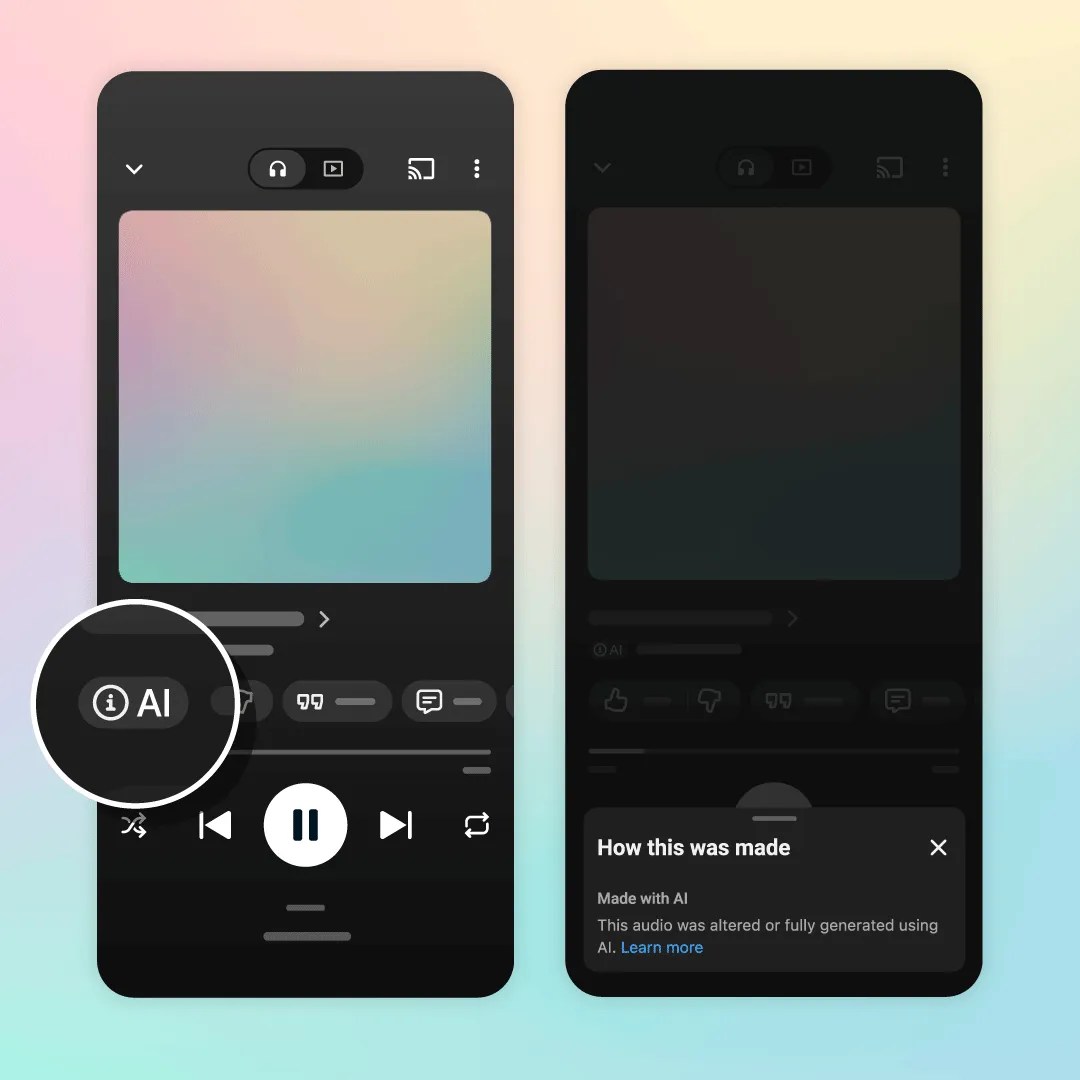
YouTube is adding a “Made with AI” label to tracks that were altered or fully generated using artificial intelligence. The label rolls out today in YouTube Music, mirroring the platform’s existing system for flagging AI-generated video content. Music partners uploading tracks can self-disclose generative AI use; if no disclosure is provided, YouTube will analyze “other signals” to determine whether labeling is warranted. The approach covers compositions and vocals created with generative models, representing the latest effort by a major platform to bring transparency to AI-assisted creative work while balancing artist disclosures with automated detection methods.
Compiled from the configured RSS feed.