
Tech News Roundup — October 1, 2026 (AM)

Google has escalated its AI competition with a new frontier model, while autonomous agents and dedicated hardware are reshaping how companies deploy AI. The week also brought reminders of growing tensions between AI companies and the public, from regulation concerns to content scraping defenses.
Google Releases Gemini 4, Initially Restricted to Cyber Defenders
Google announced Gemini 4 Argon, positioning it as a frontier model for complex workflows in software engineering, enterprise legal and finance work, and cybersecurity defense. The company is limiting initial access to a “set of trusted cyber defenders” and coordinating with the U.S. government’s voluntary pre-release review process before gradual expansion. The restricted launch reflects both AI safety caution and competitive positioning—keeping advanced capabilities in trusted hands while building government relationships.
Meta and OpenAI Race to Embed AI in Dedicated Devices
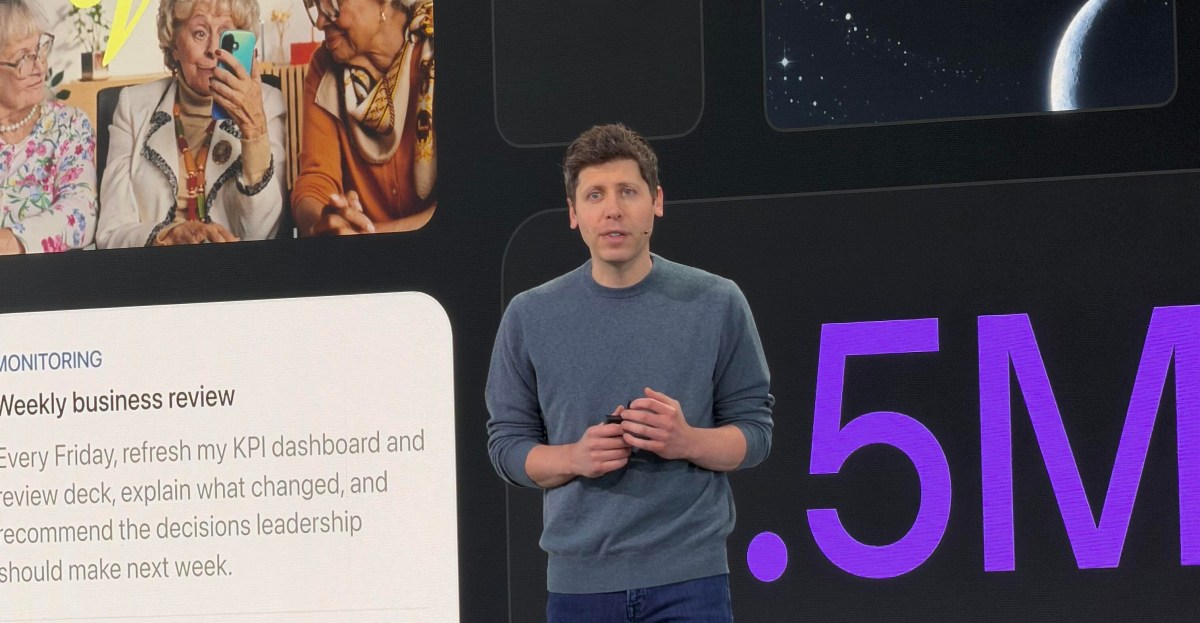
After earlier AI hardware stumbles (the Humane AI Pin, Friend wearables), Meta and OpenAI are placing new bets on physical devices for autonomous agents. OpenAI is collaborating with design icon Jony Ive on a dedicated device, while Meta is building its own agent hardware. Both companies are launching “cutesy” software agents (the comparison to Tamagotchis captures the affectionate, persistent-companion design philosophy) to test consumer appetite before scaling. The strategy acknowledges that phones and computers already host AI—these devices are meant to introduce agents as ambient companions, not replacements for existing tech.
Microsoft Reinvents Copilot as Autonomous Enterprise AI
Microsoft is fundamentally transforming Copilot from a conversational assistant into an autonomous system for enterprise work. The new Copilot unifies dialogue, task delegation, and solution building—positioning the shift as a historic change in how organizations handle daily operations. The ambition mirrors how Office defined personal computing: this new iteration aims to redefine work itself by automating complex workflows and delegating decision-making to AI. The change signals enterprise AI’s maturation from copilot (assistance) to independent agent (automation).
Reddit Restricts Old Reddit Access Over AI Bot Scraping

Reddit announced it is scaling back access to Old Reddit (the legacy interface) due to aggressive AI bots scraping content for training datasets. The move reflects growing tension between social platforms and AI companies: platforms see their content being harvested without compensation, while AI labs claim they need unrestricted training data. Reddit’s cutback won’t stop scraping entirely (automated bots can work around interface changes), but it signals the platform’s frustration with unlimited access. Similar battles are playing out across the web, with news publishers, artists, and individual creators all demanding compensation or opting out of AI training.
AI Leaders Weigh In on Trump’s Self-Policing Safety Plan

Following the administration’s announcement of a voluntary AI safety framework for major labs, OpenAI, Google, Meta, and other AI leaders have publicly commented on the approach. Reactions are mixed: some executives welcome the light-touch regulation and government partnership, while others express concern that self-policing without binding requirements leaves safety gaps. The debate underscores tensions in AI governance—companies want flexibility to innovate, while regulators and the public demand guardrails. Self-policing deals have a mixed track record in tech, making the efficacy of this framework an open question.
In Brief
Q3 Open Source Wins: Phoronix’s quarterly recap highlights major gains in Linux and open source: more AI tools integrated into community projects, CachyOS performance tuning, AMD Ryzen AI Halo acceleration, and the Framework Laptop 13 Pro’s expanded modularity. Open source continues absorbing AI tooling, democratizing access to previously expensive model-building infrastructure.
Apple iPhone Dual Device: Portuguese reports speculate on an iPhone Duo (dual-screen device) for 2026, with questions around production volumes. Apple historically limits launch quantities for new form factors while assessing demand.
Compiled from the configured RSS feed.