
Tech News Roundup — September 25, 2026 (AM)

The Linux kernel is formalizing AI agent integration, Qualcomm advances mobile hardware on multiple fronts, and Meta contends with legal challenges while pushing AI boundaries. Meanwhile, Microsoft reshuffles its communications arm and gaming on open-source platforms gets stronger.
AI Integration Formalized Across Linux and Cloud
Recognizing the deluge of AI-generated patches and agent contributions to the Linux kernel, the developer community is introducing an AGENTS.md Markdown file to provide explicit guidance for AI/LLM agents submitting code. The file will outline preferred patch submission practices, coding standards, and how agents should label their contributions for transparency. Simultaneously, Google is rolling out Gemini 3.8 Live with a new Live Avatar feature that gives the AI a lifelike animated persona capable of lip-syncing across 97 languages without visual distortion. The avatar update is initially available to Gemini Enterprise customers and represents a significant step toward more natural human-AI interaction interfaces.
Qualcomm Pushes Mobile Hardware Forward
Qualcomm is accelerating hardware innovations on multiple hardware vectors. First, the company posted open-source GPU driver patches for Adreno 850 support in their Snapdragon X2 SoCs, enabling broader manufacturer adoption and better gaming performance on lower-tier X2 variants. Separately, Qualcomm unveiled its Snapdragon Sound Elite Gen 2, a breakthrough audio processor that integrates “micro-power Wi-Fi 6E” directly on-chip, allowing wireless earbuds and audio glasses to connect directly to home Wi-Fi networks and access cloud services without relying on Bluetooth. This resolves a perennial pain point for wireless audio: the so-called Wi-Fi earbud dream, promised since 2023, may finally become a reality.
Meta’s Dual Reality: Litigation and AI Advances

Meta faces mounting legal pressure in ongoing child safety lawsuits, where evidence has revealed that the team behind its Teen Accounts project ordered branded merchandise reading “a/c priv.” (attorney-client privilege) as company swag — a move plaintiffs argue exemplifies a “culture of privilege abuse” aimed at shielding internal deliberations from disclosure. The incident underscores tensions between the company’s legal defense and its public accountability. On the innovation front, Meta is advancing its Muse AI agent, which sources reveal allows users to download its entire filesystem — a potential point of contention for future regulation. Muse’s animated mascot design, while visually charming, prompted some observers to note the potential for anthropomorphization to obscure underlying functionality in marketing.
Microsoft Elevates Brad Smith to Oversee Communications

Microsoft is reorganizing its communications strategy, moving the communications group from marketing into its Corporate, External, and Legal Affairs (CELA) organization. Microsoft vice chair and president Brad Smith will oversee the division while the company searches for a permanent replacement for departing Chief Communications Officer Frank Shaw, who has spent nearly three decades managing Microsoft’s public messaging. The shift signals an intent to integrate communications more tightly with legal and external strategy during a period of regulatory scrutiny and corporate restructuring.
Open Source Gaming Gains Momentum
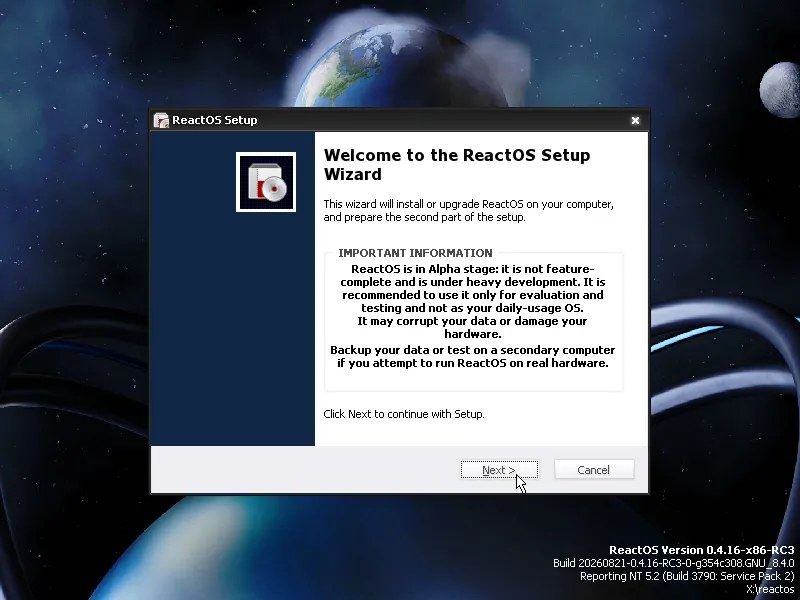
ReactOS, the open-source Windows compatibility layer, has landed a significant DirectX stack update sourced from the Wine project, dramatically expanding gaming compatibility on the platform. The update brings substantial improvements to graphics rendering and game execution, making ReactOS a more viable option for Linux and open-source enthusiasts looking to run modern titles. The contribution exemplifies the collaborative energy flowing between Wine and ReactOS development communities as both projects converge on better Windows application compatibility.
In Brief
A CyberPowerPC gaming prebuilt equipped with an RTX 5070 and Intel Core i7 is selling for $1,549 — offering strong value in the RTX 50-series ramp-up phase. Google Chrome now allows users to resume browser tabs across devices with Gemini-powered context memory, streamlining multi-device workflows. Inmo has recalled its Air3 smart glasses due to temple overheating that caused user burns, with a free firmware update available.
Compiled from the configured RSS feed.