Tech News Roundup — August 26, 2026 (AM)
OpenAI’s custom AI chip continues the industry race toward specialized hardware, Microsoft extends Windows to Arm with growing ecosystem support, and chip makers push 2nm manufacturing to the mainstream. A quiet but consequential week for AI inference, OS platforms, and developer tools.
AI Hardware & Inference
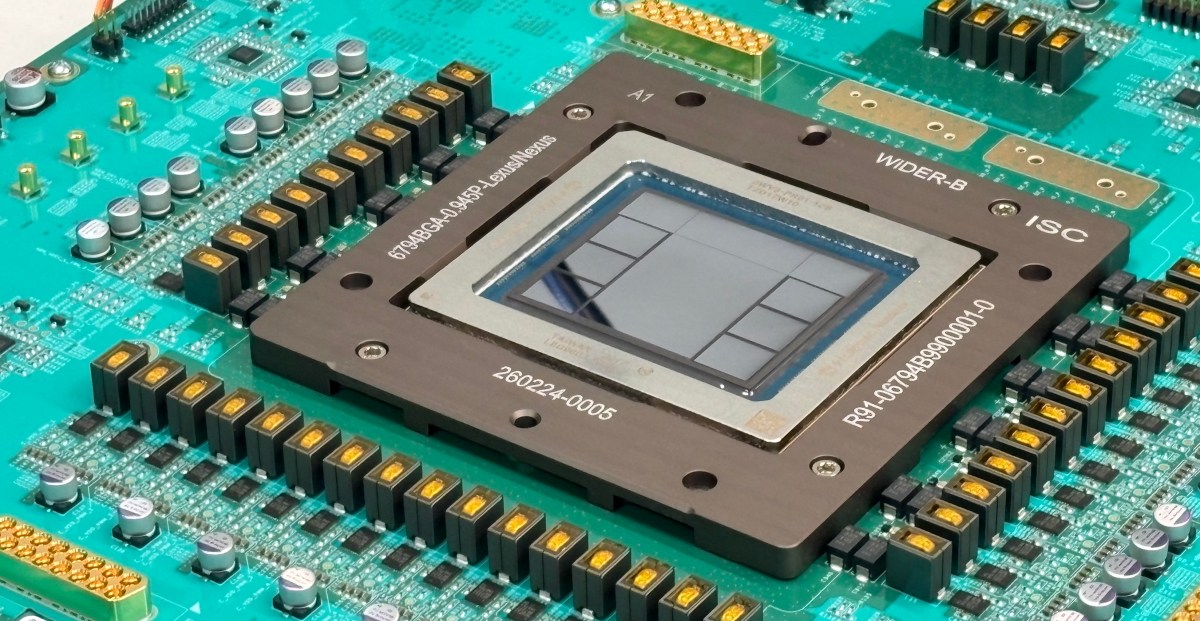
OpenAI’s Jalapeño chip balances latency and throughput for faster AI responses. The Application-Specific Integrated Circuit (ASIC), designed in partnership with Broadcom, marks OpenAI’s continued investment in bespoke AI inference hardware. During a briefing with reporters, OpenAI hardware vice president Richard Ho emphasized that Jalapeño achieves the “best of both worlds” — traditionally AI systems face a trade-off between lower latency (faster individual responses) and higher throughput (more concurrent requests). The chip targets inference workloads, where a trained model executes tasks or deploys agents. This move reflects the broader industry trend away from reliance on Nvidia GPUs toward purpose-built silicon for cost and efficiency gains at scale.
Processor Launches: 2nm Arrives at Scale

Apple launches M6 2nm 12-core CPU and quad-die M5 Ultra, advancing mainstream adoption of 2nm manufacturing. The M6 represents Apple’s continued evolution of in-house silicon, now fabricated at TSMC’s 2nm process node. Alongside the quad-die M5 Ultra configuration for desktop Mac performance, the M6 brings the 2nm advantage to laptops and smaller systems. This marks a significant milestone: 2nm is no longer exclusive to flagship dies but now scales across the product line. The quad-die M5 Ultra approach (stacking multiple dies) offers a pathway to extreme performance without waiting for monolithic 2nm dies to grow beyond practical limits.
Platform Maturation: Windows on Arm & Linux Tooling

Microsoft confirms Windows 11 on Arm is now a “first-class platform for any workload” with 7,000+ compatible apps and multi-vendor hardware arriving fall 2026. NVIDIA’s RTX Spark SoC joins Qualcomm’s Snapdragon X family, signaling the Arm ecosystem’s graduation from niche to mainstream. Klaus Diaconu, Partner Director at Microsoft, stated the market is “sending a clear signal” with multiple silicon providers investing in Windows on Arm. By fall 2026, Microsoft Surface, ASUS, Dell, HP, Lenovo, and MSI will offer RTX Spark devices. Over 7,000 apps now ship with native Arm support or run via Windows Prism emulation. The productivity app category remains the cornerstone, with Signal, Discord, Proton Mail, FxSound, and others providing Arm-native versions.
LLVM/Clang 23.1 released with AMD Zen 6 and NVIDIA Rigel support, plus partial C++26 backing. The LLVM compiler infrastructure advances its chipmaker partnerships with AMD’s next-gen Zen 6 and NVIDIA’s Rigel GPU architecture now supported natively. Partial C++26 support brings developers closer to the upcoming C++ standard. As the H2'2026 update to the open-source toolchain, LLVM 23.1 continues the momentum of specialized compiler optimizations for emerging silicon.
Linux Distribution & Desktop

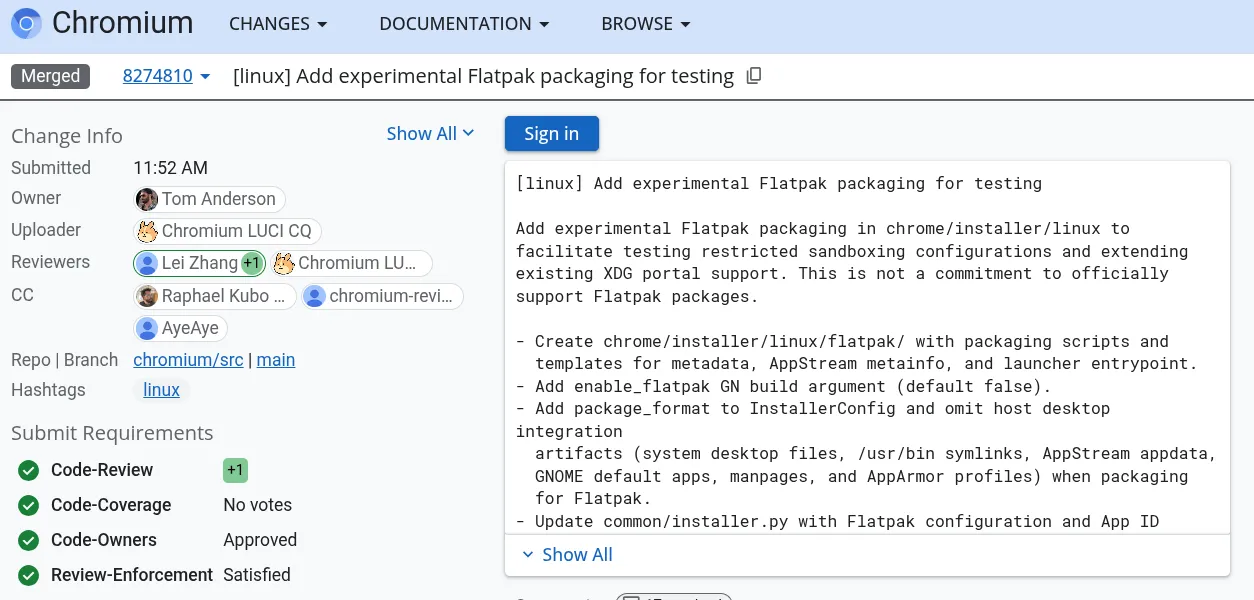
Google engineers explore Flatpak packaging for Chrome/Chromium on Linux, signaling renewed interest in cross-distro delivery. Google engineers responsible for the Chrome/Chromium web browser are experimenting with Flatpak, the universal Linux packaging format that abstracts away distribution differences. While Google isn’t yet committed to officially supporting Flatpak packages, the exploration suggests growing acknowledgment that Flatpak can reduce fragmentation across different Linux distros. Flatpak’s sandbox model also appeals to security-conscious deployments where browser isolation matters.
Linux 7.0-mk2 released with promising multi-kernel performance gains. The Linux 7.0-mk2 variant showcases performance improvements from multi-kernel scheduling and resource allocation. Benchmarks demonstrate meaningful gains when multiple kernel instances cooperate on heterogeneous hardware, a topic of growing relevance as Arm and x86 coexist in server and edge environments.
Mobile & Policy
Nothing OS 5.0 adds adaptive color and customizable homescreen. Nothing’s Android 17–based update introduces adaptive color tinting that pulls from your wallpaper and updates whenever the wallpaper changes. Alongside Android’s native Dynamic Colors, the company offers limited color areas on the homescreen while preserving Nothing’s monochrome identity. The new design is offered as an optional theme, letting users stick with the existing simplified look.
H1B visa fees surge over $103,000, marking unprecedented escalation in tech hiring costs. The Department of Homeland Security announced a dramatic fee increase on H-1B visas, raising the cost significantly for employers sponsoring skilled foreign workers. Combined with a separate State Department announcement to revoke visas for up to 200,000 asylum seekers—potentially the largest mass visa revocation in US history—the policy shifts signal tightened access to legal immigration pathways. More than a year into President Trump’s second term, the administration is escalating restrictions on both temporary and permanent legal immigration, forcing companies to rely increasingly on domestic talent.
Compiled from the configured RSS feed.