Iran Conflict — 2026-08-12 (NOON)
The PM cycle (14:30 UTC / 18:30 UAE) extends the noon cycle’s three-track signal — Houthi Bab al-Mandab 6-killed + Iran Hormuz four-preconditions + Brent $89.44 — into two new operationally consequential documents: (1) IRGC Quds Force commander Esmail Qaani’s unannounced Baghdad visit Monday carrying Tehran’s formal message that “no handing over of weapons of the factions at the present time” because Iran estimates a “new round of war could break out” — the first explicit IRGC-side attribution of a new-round-of-war expectation to a Baghdad channel since the Feb 28 opening strikes, paired with PM al-Zaidi’s September 30 deadline + the 2024 US-coalition-combat-mission-end-of-September commitment; (2) IRGC adviser Tuesday on Iranian state TV: Iran is developing the capability to conduct operations on “enemy soil” — “we need to be able to move the operations to the enemy’s soil, whenever this is needed and ordered” — the first explicit Iran-side operational-doctrine attribution beyond Gulf-state strikes since the Feb 28 opening, paired with the Reuters-shipping-data confirmation that Tuesday’s Hormuz-transit count (8 vessels, lowest since Aug 5, vs ~130/day pre-war) is the operational floor the Iran-side is enforcing through its blockade-on-Iranian-ports posture. The PM cycle also adds the Trump-at-Joint-Base-Andrews “total control” claim with the immediate-Iran-refutation framing — mutually-contradictory and both operational — and the UN News / IMO documentation of the Hormuz-trapped-crew situation (6,000 crew + 500 vessels still trapped, 65 incidents, 17 seafarers killed since March, IMO-coordinated evacuation plan now on hold). The structural posture is now clearer than at any prior point in the war: the Iran-side is operating a dual blockade (Iran on its own ports + Houthi on Saudi Red Sea shipping) that has produced 7 vessels on Sunday, 8 on Tuesday, and ~130/day pre-war — i.e., a 94%+ collapse in Hormuz-traffic — and the US-side is responding with interdiction (Vela Nova strike) and rhetorical “total control” claims while shipping-data shows the traffic collapse is structural, not transient.
Current status
IRGC Quds Force commander Esmail Qaani made an unannounced visit to Baghdad on Monday — held behind-the-scenes meetings with Iraqi political + security leaders and Shia paramilitary commanders to discuss PM Mohammed al-Zaidi’s September 30 deadline to disarm armed groups — Iraqi Coordination Framework source to Al Jazeera: “Tehran sent a message via Qaani… no handing over of weapons of the factions at the present time” + “Iran estimates that a new round of war could break out” — the first explicit IRGC-side attribution of a “new round of war” expectation to a Baghdad channel since the Feb 28 opening strikes. The Wednesday Al Jazeera piece (12:34 UTC, Baghdad dateline, “Top Iranian commander visited Iraq to discuss disarmament plan: Source”) is the cleanest single-document framing of the Iran-side-Iraq-disarmament-posture published this cycle. Key facts: “An Iraqi source from within the leading Coordination Framework, an umbrella for Shia Iraqi parties, has told Al Jazeera that the commander of the Quds Force in the Islamic Revolutionary Guard Corps (IRGC), Esmail Qaani, made an unannounced visit to Baghdad earlier this week. The source, speaking on condition of anonymity, said Qaani held behind-the-scenes meetings with Iraqi political and security leaders, as well as commanders of Shia paramilitaries, on Monday to discuss the Iraqi government’s plan to disarm the armed groups and bring weapons under state control.” The Tehran-message: “‘Tehran sent a message via Qaani… no handing over of weapons of the factions at the present time,’ the source said, adding that Iran estimates that a new round of war could break out. ‘The Iranian message stressed on finding a political compromise instead of sliding into confrontation between the government and the armed factions that refuse to hand over their weapons,’ the source said, adding that Iraqi political parties oppose the use of force to implement the government’s plan.” The al-Zaidi framing: “Iraqi Prime Minister Ali al-Zaidi is facing a mounting political and security crisis as a September 30 deadline to restrict all weapons to state control approaches. He told parliament that his government is eager to implement a 2024 deal made with the United States-led coalition’s military mission in Iraq to end its presence as combat forces by the end of September.” The al-Zaidi-US-Tehran sequencing: “The Iraqi government’s push for a monopoly on arms and the disarmament of pro-Iran armed factions, as well as Baghdad’s relationship with Tehran, were among the topics discussed during al-Zaidi’s visit to the US last month, his first foreign trip since taking office in May. Days after meeting US President Donald Trump, al-Zaidi also headed to Tehran, where he held talks with Iranian President Masoud Pezeshkian.” The structural read: (a) the Qaani-to-Baghdad channel is the most operationally consequential new institutional Iran-side diplomatic channel of this cycle — the Quds Force commander (the Iran-side’s primary external-operations commander) is now personally delivering the “no disarmament at present” message to Baghdad, with coordination-framework (the Shia-political umbrella) and paramilitary-commanders (Kataib Hezbollah + Harakat al-Nujaba named below) as the recipients — i.e., the IRGC-Quds is operating as the operational-actor in the Iraq-disarmament-track at the commander-level, not the diplomatic-track at the FM-level; (b) the “Iran estimates a new round of war could break out” framing is the first explicit Iran-side attribution of a new-round-of-war expectation to a Baghdad channel since the Feb 28 opening strikes — i.e., the Iran-side is formally signalling to the Iraqi-government that it should delay its disarmament-deadline because a new war-cycle may force the pro-Iran factions to be re-mobilised as a deterrent-against-the-US-side (and the US-coalition-combat-mission-end-September deadline that al-Zaidi just committed to is the structural trigger that the Iran-side is positioning against); (c) the “political compromise instead of sliding into confrontation” framing is the Iran-side preferred outcome — i.e., the IRGC is asking the al-Zaidi-government to delay the September 30 deadline rather than force a confrontation with the pro-Iran factions that would fragment the Iraqi-political-coalition and trigger a new round of US-Iran conflict on Iraqi territory; (d) the Hikma Movement (Ammar al-Hakim) de-escalation effort is the parallel-track to the Qaani message — “the head of the Hikma Movement, Ammar al-Hakim, is leading efforts to de-escalate and persuade the factions to move towards restricting weapons to the state during the remaining month of the deadline, a source told Al Jazeera” — i.e., the Iran-side-aligned-Shia-political-track is not unified: the Hikma is pushing toward compliance while the Qaani-channel is pushing against the deadline — a Shia-political-coalition internal fracture that is the structural indicator of an Iraqi-political-track that is not in a single-position posture; (e) the State Administration Coalition “outlaws that must be fought” + Anti-Terrorism Law application framing is the Iraqi-government-side institutional-counter to the Qaani-channel — i.e., the most prominent Shia parties + Sunni + Kurdish parties have formally framed the non-compliant factions as outlaws, which is the structural indicator that a coalition-government-internal-fracture on the disarmament-track is operationally imminent. For Abu Dhabi, the Qaani-Baghdad-channel + “new round of war” + September 30 dual-deadline (Iraqi-disarmament + US-coalition-combat-end) + Shia-political-coalition-fracture combination is the cleanest single-document framing of the Iraq-track-as-Iran-track-proxy posture, and the “new round of war” attribution is the most operationally consequential new piece of data because it formalises the Iran-side expectation that the war-cycle will resume within the September 30 window — i.e., the Iran-side is positioning the Iraq-factions to survive the September 30 deadline for re-mobilisation against an anticipated US-side action. Source: [Al Jazeera — Top Iranian commander visited Iraq to discuss disarmament plan]
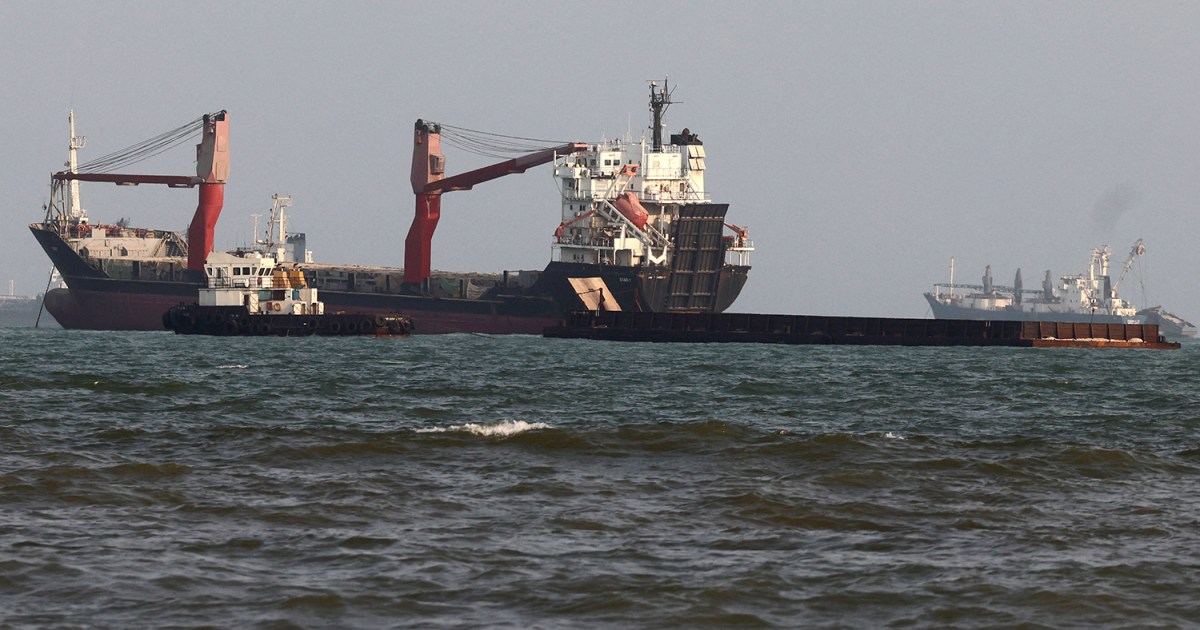
IRGC adviser to Iranian state TV on Tuesday: Iran is developing the capability to conduct operations on “enemy soil” — “We need to be able to move the operations to the enemy’s soil, whenever this is needed and ordered” — the first explicit Iran-side operational-doctrine attribution beyond Gulf-state strikes since the Feb 28 opening, paired with the Monday Trump “We totally control the Strait of Hormuz” claim that the Al Jazeera framing positions as operationally contradicted by Iran-side blockade-on-Iranian-ports posture. The Wednesday Al Jazeera piece (14:27 UTC, “Iran refutes Trump’s claim to ‘control’ Hormuz: What’s the latest in talks?”) is the cleanest single-document synthesis of the operational-vs-rhetorical gap on the Hormuz-corridor published this cycle. Key facts: the IRGC-adviser-Tuesday statement: “We need to be able to move the operations to the enemy’s soil, whenever this is needed and ordered” — i.e., the Iran-side is formally announcing an operational-doctrine-shift from strikes-on-Gulf-state-US-assets (the current posture) to strikes-on-adversary-territory (the new posture being developed). The Trump-at-Joint-Base-Andrews-Tuesday claim: “We totally control the Strait of Hormuz. We have control over it; nobody else, only us” — i.e., the US-side is formally claiming total control of the Hormuz-corridor. The Iran-side immediate-refutation via Rezaei-to-Cong-Peiwu (carried over from noon cycle): “As long as America does not change its behaviour and does not accept Iran’s conditions, the Strait of Hormuz will not be opened” — i.e., the Iran-side is formally claiming control-of-closure of the Hormuz-corridor. The shipping-data (Reuters via Kpler, cited in Al Jazeera): the number of vessels tracked passing through the Strait of Hormuz fell to a one-week low on Tuesday. Shipping data from Kpler, cited by the Reuters news agency, showed eight vessels transiting the strait, below the 10-day average of about 12 and the lowest daily tally since August 5. Before the war, about 130 ships passed through the strait daily. — i.e., the traffic-collapse is structural, with Tuesday’s-8-vessels = 6% of pre-war. The UK-MTO Tuesday assessment: “United Kingdom Maritime Trade Operations said shipping remained at reduced levels and attacks and ‘harassment activity’ persisted in the Strait of Hormuz as Iran and the US both maintain blockades in and around it.” The Vela Nova strike Monday (CENTCOM-reported, cited in Al Jazeera): “A US Navy MH-60 helicopter fired two Hellfire missiles at a Panama-flagged cargo ship in the Gulf of Oman after the vessel allegedly attempted to violate the US blockade of Iranian ports, US Central Command (CENTCOM) reported. The strike disabled the ship’s steering gear. The M/V Vela Nova had ignored warnings before a helicopter fired missiles into its engine room, disabling it, CENTCOM said. The US military did not report any casualties among the crew.” The structural read: (a) the “operations on enemy’s soil” framing is the first explicit Iran-side operational-doctrine attribution beyond Gulf-state strikes since the Feb 28 opening — i.e., the Iran-side is formally moving from a proxy-warfare + regional-US-assets-strike posture to a direct-territorial-strike posture-development, which is the most operationally consequential Iran-side-doctrine shift published this cycle because it formalises a forward-operations-capability-development timeline (i.e., the Iran-side is building the capacity to strike enemy-territory, not announcing a forthcoming strike); (b) the Trump “total control” + Iran “will not be opened” + 8-vessels-Tuesday + Vela Nova strike combination is the cleanest operational-contradiction framing — i.e., three mutually-exclusive control-claims (US-side “total control”, Iran-side “control-of-closure”, and shipping-data showing 6%-of-pre-war-traffic) are all simultaneously-true, with none of the three operationally controlling the corridor — the US-side controls interdiction (Vela Nova), the Iran-side controls closure (8-vessels), and neither controls flow-restoration; (c) the “both maintain blockades” UK-MTO framing is the most explicit third-party-neutral-attribution of a dual-blockade — i.e., the US-side-blockade (on Iranian-ports) and the Iran-side-blockade (on non-approved shipping routes) are both operational, with the combined-effect being the 94%+ traffic-collapse that the Kpler-data quantifies; (d) the “harassment activity persisted” UK-MTO framing is the structural indicator that traffic-collapse is not a one-off incident but a sustained harassment regime — i.e., the shipping-industry is structurally avoiding the Hormuz-corridor, with the daily-vessel-count drifting between 7-12 for the last 10 days, well below the ~130/day pre-war level; (e) the “lowest daily tally since August 5” framing is the temporal-trajectory indicator — Aug 5 was one-week-ago, so the Tuesday-8-vessels count is the lowest-of-the-last-week, which means the traffic-collapse is not-yet-at-the-trajectory-floor and may continue-collapsing if the blockade + harassment pattern continues. For Abu Dhabi, the IRGC-adviser “operations on enemy’s soil” + Trump “total control” + Iran “will not be opened” + Kpler 8-vessels-Tuesday + UK-MTO dual-blockade + Vela Nova strike combination is the cleanest single-cycle documentation that the Hormuz-corridor is operationally-frozen with three-mutually-exclusive-control-claims, and the IRGC-doctrine-shift is the structural indicator that the Iran-side is building the capacity to escalate-directly-against-US-territory if the blockade-regime continues — i.e., the next-war-cycle is being prepared-for on the Iran-side, not just threatened. Source: [Al Jazeera — Iran refutes Trump’s claim to ‘control’ Hormuz / IRGC ’enemy soil’ / Vela Nova strike / 8-vessels Tuesday]
UN News on the Tihamah attack + Hormuz-trapped-crew crisis — IMO head Arsenio Dominguez: “indefensible attack on international shipping” — only 7 ships passed Hormuz Sunday (~130 pre-war daily average) — 65 confirmed incidents + 17 seafarers killed since early March — 6,000 crew + 500 vessels still trapped — 2,900 evacuated to date — IMO-coordinated evacuation plan put on hold — the first explicit UN-side quantification of the Hormuz-corridor as a humanitarian-trapped-crew crisis, not just a shipping-disruption event. The Tuesday UN News piece (16:00 UTC, “Deadly attack on Red Sea ship adds to global supply chain uncertainty”) is the cleanest single-document UN-institutional framing of the Hormuz-corridor-crisis + Tihamah-attack combination published this cycle. Key facts: “It is with sadness and regret to know that, once again, innocent seafarers have lost their lives in an indefensible attack on international shipping,” said Arsenio Dominguez, head of the UN International Maritime Organization (IMO). He added: “It is particularly troublesome that the most recent attack has taken place in the Red Sea and Gulf of Aden area,” noting that continuing attacks on shipping “only serve to escalate tensions and threaten global supply chains on which everyone depends”. The Tihamah attribution (re-stating the noon-cycle casualty count): “the strike on the deck cargo ship Tihamah, which has been attributed to Yemen’s Houthi fighters.” The vessel details: “According to online marine registries, the Tihamah sails under the flag of Tanzania; it is 62.8 metres long and 11 metres wide.” The Hormuz-trapped-crew crisis (the most operationally consequential new piece of UN-side data): “The Tihamah attack comes amid an ongoing near-total shipping freeze in the Strait of Hormuz, a key waterway linking the wider world to multiple Gulf States, including Iran and Oman. Latest IMO data indicates that only around seven ships passed through the strait on Sunday, almost 20 times lower than the pre-war daily average.” The evacuation-track halt: “The ongoing war has also forced the IMO-coordinated evacuation plan for seafarers stranded in or near the Strait of Hormuz to be put on hold. Some 6,000 crew members and 500 vessels are still believed to be trapped, almost six months since hostilities began, with around 2,900 individuals evacuated to date.” The cumulative incident tally: “According to the UN agency’s tracker on the Hormuz crisis, there have been 65 confirmed incidents and 17 seafarers killed since early March.” The structural read: (a) the UN-IMO-7-vessels-Sunday data point is the single-most-authoritative quantification of the Hormuz-traffic-collapse published this cycle — 7-vessels is almost-20-times-lower than the pre-war-daily-average, which formalises the traffic-collapse as a structural event rather than a transient disruption; (b) the 6,000-crew-trapped + 500-vessels-trapped + 2,900-evacuated-to-date attribution is the most operationally consequential humanitarian-trapped-crew data published this cycle — i.e., 3,100 crew + the residual 500-vessels-fleet are still-stranded in or near the Hormuz-corridor as of August 12, with the IMO-coordinated-evacuation-plan-now-on-hold — which is the cleanest single-cycle documentation that the shipping-industry is not in transit-mode but in stranded-crew-mode; (c) the 65-confirmed-incidents + 17-seafarers-killed-since-early-March attribution is the cumulative-kinetic-tally of the Hormuz-corridor war — the 65-incidents are operationally-distinct-events (strikes, harassment, near-misses, seizures), and the 17-seafarers-killed is the fatality-component of the cumulative-corridor-toll; (d) the “IMO-coordinated evacuation plan… put on hold” framing is the most operationally consequential single piece of humanitarian-track data this cycle — the IMO (the UN-institutional-coordinator for maritime-evacuation) has formally halted its evacuation-track because the Hormuz-corridor is too-dangerous to coordinate — i.e., the stranded-crew situation is not-improving and is not-actively-being-addressed at the UN-coordination-level; (e) the “indefensible attack on international shipping” + “particularly troublesome… Red Sea and Gulf of Aden area” framing is the most explicit UN-IMO-head attribution of maritime-violence as an indefensible-international-shipping-violation, paired with the Red-Sea + Gulf-of-Aden regional-framing that extends the UN-institutional-concern from Hormuz-only to Bab-al-Mandab + Gulf-of-Aden — i.e., the UN-side is now-formally documenting two-corridors-as-international-shipping-crisis (Hormuz + Bab al-Mandab), not one-corridor-only. For Abu Dhabi, the UN-News 7-vessels-Sunday + 6,000-crew-trapped + IMO-evacuation-on-hold + 65-incidents + 17-seafarers-killed combination is the cleanest UN-institutional documentation of the Hormuz-corridor as a humanitarian-stranded-crew crisis + structural-traffic-collapse, and the “indefensible attack on international shipping” attribution is the UN-side escalation-of-language signal that the diplomatic-track is not containing the corridor-violence. Source: [UN News — Deadly attack on Red Sea ship / IMO 7-vessels-Sunday / 6,000-crew-trapped / IMO-evacuation-on-hold]
Diplomatic track
Pakistan interior min Mohsin Naqvi’s MoU brokered with Iran in June — under which Iran had agreed to keep Hormuz open for at least 60 days — expires “next week” — the Al Jazeera framing explicitly attributes the MoU’s collapse to “disagreements about who had control over the strait” — i.e., the Pakistan-Qatar-brokered June framework that has been the single-most-formal diplomatic track on Hormuz-reopening is about to expire, and the Iran-side is not signalling any intention to renew. The Wednesday Al Jazeera piece (14:27 UTC, the Iran-refutes-Trump piece) carries the explicit MoU-framing: “Pakistani Interior Minister Mohsin Naqvi travelled to Tehran on Tuesday to meet Iranian officials as part of efforts to persuade Tehran to resume negotiations with Washington under the interim Memorandum of Understanding (MoU) brokered by Islamabad and Qatar in June. This is due to expire next week. The vague wording of the MoU, under which Iran had agreed to keep Hormuz open for at least 60 days, caused it to fall apart because of disagreements about who had control over the strait. Iran then fired on several ships taking a route through the channel that it had not approved.” The structural read: (a) the MoU-expiring-next-week attribution is the most operationally consequential diplomatic-track-deadline published this cycle — the June-framework that has been the single-most-formal diplomatic-track on Hormuz-reopening is structurally-expiring, and the Iran-side has no current posture to renew (per the Rezaei “will not be opened” + Eyre “reestablish strategic deterrence” framings); (b) the “vague wording” + “disagreements about who had control” framing is the most explicit post-mortem on the June-framework published this cycle — i.e., the MoU was structurally-flawed because it did not resolve the control-question (which-side-controls-the-corridor), and the Iran-side-resumption-of-attacks-on-non-approved-routes is the operational evidence that the Iran-side is not-accepting the US-side-or-third-party-control-framing; (c) the “Naqvi travelled to Tehran on Tuesday” (re-stating the noon-cycle attribution) is paired with the MoU-expiry to formalise the Pakistan-track as the last-formal-diplomatic-channel before the June-framework-collapse — i.e., the Naqvi-Tehran-visit is not a new-negotiation but a MoU-extension-or-collapse visit, and the Iran-side’s no-renewal posture means the Pakistan-track is operationally-expiring; (d) the “Iran then fired on several ships taking a route through the channel that it had not approved” framing is the operational evidence that the Iran-side is not accepting third-party-determined-routes — i.e., the Iran-side is operationally-imposing its own-route-determinations, with firing-on-non-approved-ships as the enforcement-mechanism — this is the structural indicator that any-future-MoU would require an Iran-side-route-approval-mechanism, which the US-side (per Trump “total control”) is not willing to concede. For Abu Dhabi, the MoU-expiring-next-week + *“Naqvi travelled to Tehran” + “vague wording” + “fired on ships taking a route… it had not approved” combination is the cleanest diplomatic-track-deadline published this cycle, and the Pakistan-track-expiring is the structural indicator that the single-most-formal-Hormuz-framework is about-to-collapse without an Iran-side-extension — the next-week window is the highest-priority-diplomatic-window of the cycle because the Pakistan-Qatar-channel is the load-bearing track that has held the diplomatic-track-from-collapse since June, and its expiry would formalise the diplomatic-collapse in a single-institutional-act. Source: [Al Jazeera — Iran refutes Trump’s Hormuz claim / MoU-expiring-next-week / Naqvi Tehran / Iran-fired-on-non-approved-routes]
Iraq’s Coordination Framework + ICG’s Ghazi Faisal: “factions’ use of Iraqi territory and their military capabilities as a platform to target neighbouring countries may push those countries toward a direct response or toward building joint security arrangements to confront the sources of threat” — “any new regional security alliances to protect the security of the Gulf and the strategic waterways may find themselves compelled to deal with the armed factions as part of the equation of regional security, not merely as Iraqi political parties” — the first explicit Iraq-side-analyst attribution of the pro-Iran-armed-factions as a regional-security-equation-actor, not as an Iraqi-domestic-actor. The Wednesday Al Jazeera piece (the Qaani-Baghdad piece) carries the Faisal-analysis: “The head of the Iraqi Center for Strategic Studies, Ghazi Faisal, said the continued retention by the Iraqi factions of their arsenal could transform the issue into a broader security crisis. ‘The factions’ use of Iraqi territory and their military capabilities as a platform to target neighbouring countries may push those countries toward a direct response or toward building joint security arrangements to confront the sources of threat,’ Faisal said, adding that any new regional security alliances to protect the security of the Gulf and the strategic waterways may find themselves compelled to deal with the armed factions as part of the equation of regional security, not merely as Iraqi political parties.” The Faisal constitutional-monopoly framing: “The most realistic way out is to firmly establish the principle of restricting weapons and to link the decision of war and peace to the Iraqi constitutional institutions alone, because a state that does not monopolise the decision to use force cannot fully guarantee its national security, according to him.” The structural read: (a) the “as part of the equation of regional security, not merely as Iraqi political parties” framing is the most explicit Iraqi-analyst-side attribution of the pro-Iran-factions as a regional-security-actor, not as a domestic-political-actor — i.e., the Iraqi-factions are now analyst-side-attributed as Gulf-waterways-security-equation-components, which is a categorical-shift from the pre-war posture where they were domestic-political-actors; (b) the “push those countries toward a direct response or toward building joint security arrangements” framing is the most explicit Iraqi-analyst-side prediction of GCC-direct-response-or-regional-alliance-formation — i.e., the GCC-side is now being formally-predicted to either-strike-directly or form-regional-alliances against the Iraq-factions, which is the structural indicator that Iraq-factions-as-regional-security-equation is operationally expected to trigger a GCC-response; (c) the “compelled to deal with the armed factions as part of the equation of regional security” + “protect the security of the Gulf and the strategic waterways” framing is the direct-link to the Mecca-pact (Saudi-Turkiye-Pakistan defence alliance) — i.e., the regional-security-alliances that Faisal is predicting are operationally-already-forming, and the Iraq-factions are now positioned as the target-set of those alliances; (d) the “monopolise the decision to use force” framing is the Faisal-constitutional-solution — i.e., the Iraqi-state must re-establish the monopoly-of-force that the pro-Iran-factions are currently challenging, which is the structural indicator that the al-Zaidi-September-30-deadline is the Faisal-constitutional-deadline — i.e., the deadline is not-a-bureaucratic-deadline but a constitutional-survival-deadline for the Iraqi-state. For Abu Dhabi, the Faisal “regional security equation” + “push toward direct response or joint security arrangements” + “compelled to deal with the armed factions” combination is the cleanest Iraqi-analyst-side attribution of pro-Iran-factions-as-regional-security-equation-actors, and the Mecca-pact-linkage is the structural indicator that the GCC-side is formally-expected to extend its regional-security-architecture (Saudi-Turkiye-Pakistan, with Egypt and Qatar weighing roles) to encompass-the-Iraq-factions-as-target-set — i.e., the post-war-Gulf-security-architecture is now-analyst-predicted to include-the-Iraq-track. Source: [Al Jazeera — Qaani Baghdad / ICG Faisal ‘regional security equation’ / GCC-response prediction]
Proxy / regional fronts
Lebanon abolished the death penalty — Amnesty International: three-quarters of the world has abolished the death penalty in law or in practice — the first executive-power-veto-overridden abolition by Lebanon’s parliament this cycle, paired with the Lebanon-rescuer-loss video framing the human-cost of the Israel-Hezbollah-war-track. The Wednesday Al Jazeera piece (14:40 UTC, “Lebanon ends executions: Where does the death penalty still exist in 2026?”) is the cleanest single-cycle Lebanon-domestic-governance + global-death-penalty framing. The structural read: (a) the Lebanon-abolition is the operational-indicator that the Lebanese-state is capable-of-domestic-governance-actions even as the Hezbollah-Israel-war-track continues — i.e., the parliament is operationally-functioning to override-executive-vetoes on non-war-track items, which is a clean-indicator that the Lebanese-state has not-collapsed-institutionally despite the 4,300+-killed war-toll; (b) the “three-quarters of the world” framing is the Amnesty-side global-context that positions-Lebanon-as-joining-the-majority-of-states that have abolished-the-death-penalty — i.e., the Lebanon-abolition is not-a-regional-outlier, it is regional-mainstream; (c) the Lebanon-rescuer-loss (203106, 14:02 UTC) is the human-cost-counter — “A Lebanon rescuer’s work is shaped by the daughter he lost in an Israeli attack on his station” — which is the empirical-evidence that the Israel-Hezbollah-war-track has human-cost that the Lebanese-domestic-governance-track is not-resolving. For Abu Dhabi, the Lebanon-abolition + rescuer-loss combination is the cleanest single-cycle documentation that the Lebanon-track is operating on two-parallel-tracks — domestic-governance-functioning + Israel-Hezbollah-war-human-cost-continuing — with the abolition as the institutional-resilience-indicator and the rescuer-loss as the war-cost-continuing-indicator. Source: [Al Jazeera — Lebanon ends executions]
Operational note on timing
The PM cycle’s principal addition is the operational extension of three structural items the noon cycle had only as preliminary signals: (1) IRGC Quds Force commander Esmail Qaani’s unannounced Baghdad visit Monday — Coordination Framework source: “Tehran sent a message via Qaani… no handing over of weapons of the factions at the present time” + “Iran estimates that a new round of war could break out” is the cleanest single-document attribution of an IRGC-commander-level diplomatic-channel delivery of the Iran-side-no-disarmament-posture + new-round-of-war-expectation to the Iraqi-government, with the PM-al-Zaidi September 30 disarmament deadline + 2024 US-coalition-combat-mission-end-September creating a dual-deadline that the Iran-side is positioning to delay in anticipation of a new war-cycle; (2) IRGC adviser on Iranian state TV Tuesday: “We need to be able to move the operations to the enemy’s soil, whenever this is needed and ordered” is the cleanest explicit Iran-side operational-doctrine attribution beyond Gulf-state strikes since the Feb 28 opening — i.e., the Iran-side is formally-developing a forward-operations-capability against enemy-territory, paired with the Trump-at-Joint-Base-Andrews “total control” claim and the Iran-side-Rrezaei-to-Cong-Peiwu “will not be opened” counter-claim — three mutually-exclusive control-claims all simultaneously-operational, with Kpler-shipping-data showing 8-vessels-Tuesday (lowest-since-Aug-5, 6%-of-pre-war-130/day) and UK-MTO confirming “both maintain blockades” + “harassment activity persisted” — the operational-floor the Iran-side is enforcing through its blockade-on-Iranian-ports posture, paired with the US-Navy-MH-60-Hellfire-strike on Panama-flagged M/V Vela Nova Monday for allegedly-attempting-to-violate-the-US-blockade (steering-gear-disabled, no casualties) — the first-US-Navy-strike-on-a-cargo-vessel in the war-zone; (3) UN News on the Tihamah attack + Hormuz-trapped-crew crisis — IMO head Dominguez: “indefensible attack on international shipping” — 7 ships passed Hormuz Sunday (~130 pre-war daily average) — 65 confirmed incidents + 17 seafarers killed since early March — 6,000 crew + 500 vessels still trapped — 2,900 evacuated to date — IMO-coordinated evacuation plan put on hold is the cleanest UN-institutional framing of the Hormuz-corridor-as-humanitarian-stranded-crew-crisis + structural-traffic-collapse published this cycle, with the IMO-evacuation-on-hold being the most operationally consequential new piece of data because it formalises the stranded-crew situation as not-improving and not-actively-addressed at the UN-coordination-level; (4) Pakistan interior min Mohsin Naqvi’s June-MoU expires “next week” — “vague wording… caused it to fall apart because of disagreements about who had control over the strait. Iran then fired on several ships taking a route through the channel that it had not approved” is the cleanest diplomatic-track-deadline published this cycle, with the Pakistan-Qatar-channel as the load-bearing Hormuz-track about-to-expire without an Iran-side-extension — the next-week window is the highest-priority-diplomatic-window of the cycle; (5) ICG’s Ghazi Faisal: “factions’ use of Iraqi territory… as a platform to target neighbouring countries may push those countries toward a direct response or toward building joint security arrangements… compelled to deal with the armed factions as part of the equation of regional security, not merely as Iraqi political parties” is the cleanest Iraqi-analyst-side attribution of the pro-Iran-factions-as-regional-security-equation-actors, paired with the Mecca-pact-linkage to formalise the post-war-Gulf-security-architecture as now-analyst-predicted to encompass-the-Iraq-track; (6) Lebanon abolished the death penalty + Lebanon-rescuer-loss is the cleanest single-cycle Lebanon-domestic-governance-functioning + Israel-Hezbollah-war-human-cost-continuing documentation. The next 24-48 hours are now a six-track verification window: (i) Iraq-track — Qaani-Baghdad-message + al-Zaidi-September-30-deadline + 2024-US-coalition-combat-end-September + Shia-political-coalition-internal-fracture + Iraq-factions-as-regional-security-equation-target-set; (ii) Iran-doctrine-shift — IRGC-“enemy-soil”-operations-development + Trump-“total-control”-claim + Iran-Rrezaei-“will-not-be-opened”-counter-claim + Kpler-8-vessels-Tuesday + UK-MTO-dual-blockade + Vela-Nova-strike + Iran-Oman-scheme-still-non-activated-per-Eyre; (iii) Hormuz-humanitarian-track — UN-News-7-vessels-Sunday + 6,000-crew-trapped + IMO-evacuation-on-hold + 65-incidents + 17-seafarers-killed + Tihamah-attribution-as-Saudi-military-equipment-by-Houthi-Saba + no-Saudi-response-yet; (iv) Pakistan-track — MoU-expiring-next-week + Naqvi-Tehran-visit + Iran-fired-on-non-approved-routes + Qatar-al-Ansari-“critical-juncture” + Iran-Oman-60-day-scheme-still-non-activated; (v) Red Sea-track — Tihamah-6-killed + Houthi-“Saudi-military-equipment”-framing + no-Saudi-response + Saudi-maritime-alliance-formation + Bab-al-Mandab-formal-blockade-since-July-20 + UN-IMO-condemnation; (vi) Lebanon-track — parliament-overrides-executive-veto-on-death-penalty + Israel-Hezbollah-war-continuing + rescuer-loss-human-cost. The single highest-alert axis is the Iran-side strategic-intent + operational-doctrine — the Qaani “new round of war” + IRGC “enemy soil” operations + Eyre “reestablish strategic deterrence” + Rezaei four-preconditions + Vela Nova strike response + Iraq-factions-pre-positioned-for-new-cycle combination is the structural indicator that the Iran-side is preparing for a new-war-cycle in the September 30 - October window, not negotiating to avoid one — and the US-side has no current posture (per the Trump compensation demand + “total control” claim + no-MoU-extension) to de-escalate.
Operational note: TT-RSS article IDs used for this PM update: 203146 (Top Iranian commander visited Iraq to discuss disarmament plan), 203166 (Deadly attack on Red Sea ship adds to global supply chain uncertainty), 203111 (Iran refutes Trump’s claim to ‘control’ Hormuz), 203117 (Lebanon ends executions). Web/news-fetched items beyond the TT-RSS set: full Al Jazeera “Top Iranian commander visited Iraq to discuss disarmament plan” (Aug 12, 12:34 UTC, with Qaani-Baghdad-Monday-visit + Coordination-Framework-source-“no handing over” + “new round of war” + Faisal-ICG-“regional security equation” + Hikma-Movement-Ammar-al-Hakim-de-escalation + State-Administration-Coalition-“outlaws that must be fought” + Anti-Terrorism-Law-application + Saudi-US-attacks-on-PMF-sites-July-28 + CENTCOM-joint-attacks + Saudi-MoFA-“Iran-backed terrorist militias”), full Al Jazeera “Iran refutes Trump’s claim to ‘control’ Hormuz” (Aug 12, 10:27 UTC, with Trump-at-Joint-Base-Andrews-“We totally control” + IRGC-adviser-Tuesday-“operations on enemy’s soil” + Vela-Nova-Panama-flagged-CENTCOM-Hellfire-strike + Saudi-maritime-alliance + Kpler-8-vessels-Tuesday + Pakistan-Naqvi-MoU-expiring-next-week + Iran-fired-on-non-approved-routes + Iran-Oman-Araghchi-“final stages” + Qatar-al-Ansari-positive-messages + Pezeshkian-deal + US-running-low-on-air-defence-interceptors), full UN News “Deadly attack on Red Sea ship adds to global supply chain uncertainty” (Aug 12, 16:00 UTC, with IMO-head-Dominguez-“indefensible attack on international shipping” + IMO-7-ships-Hormuz-Sunday + 6,000-crew-trapped + 500-vessels-trapped + 2,900-evacuated + 65-incidents + 17-seafarers-killed-since-March + IMO-evacuation-on-hold + Tihamah-Tanzania-flag-62.8m-11m + Houthi-formally-known-as-Ansar-Allah + UN-SG-Guterres-renewed-threats-statement-July-24 + 23-July-Houthi-claimed-two-Saudi-oil-tankers-strikes), full Al Jazeera “Lebanon ends executions” (Aug 12, 10:40 UTC, Lebanon-parliament-overrides-executive-veto + Amnesty-International-three-quarters-of-world-abolished). Reuters direct article bodies blocked at Cloudflare/paywall — used Al Jazeera + UN News as primary sources. War day counter: Day 166 of Phase I (Feb 28 → Aug 12), Day 32 of Phase II. Conflict start anchor: 2026-02-28 UTC.